August 14, 2026
Early-Stage Property Investment: Why Many Investors Buy Before Completion


.jpg)
When investing in real estate, we often talk about location, construction quality, price per square metre, and the potential of the destination. But there is another factor that can significantly influence an investment decision:
timing.
Buying an apartment once an entire project has been completed and buying it during the first phase of sales do not represent the same investment position.
This is precisely why some investors do not wait for construction to be completed. They enter earlier, while the project is still developing, the selection of properties is wider, and prices reflect an earlier stage of sales.
This approach is known as early-stage property investment.
At first glance, it may seem unusual to buy an apartment before you can step onto its terrace, see the finished interior, or walk through a fully completed resort.
However, an investor who buys at an early stage thinks differently.
Rather than looking only at what has been built today, they try to understand what is being developed, where it is being developed, and at what point they are entering the project.
This is where one of the main differences between a buyer of a completed property and an early-stage investor becomes clear.
The first buys an already established product. The second makes a decision while that product is still developing.
In return, entering earlier can mean a lower initial price level and a wider selection of available units.
If a project offers different positions, floors, sizes, layouts, and views, a buyer entering at an earlier stage has the opportunity to choose while a larger part of the inventory is still available.
As sales progress, the most sought-after units gradually find their owners, the structure of the available inventory changes, and the project moves into its next phases.
For an early-stage investor, therefore, the important question is not only:
“Which apartment do I want to buy?”
Equally important is:
“At what point do I want to enter the project?”
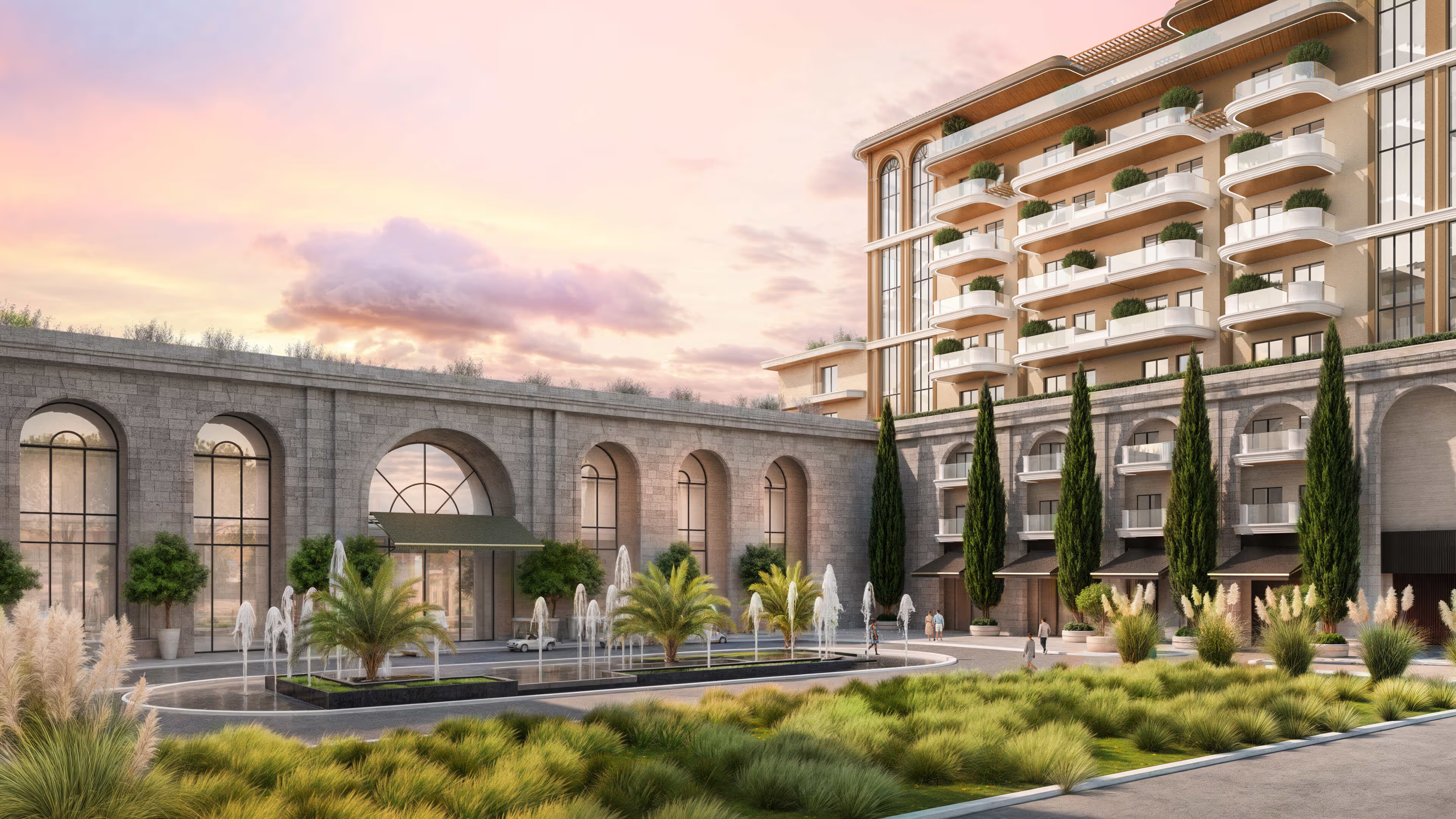
With a project such as Porta Rai, the answer to this question is particularly interesting because both sales and development are structured in phases.
This means that the timing of a purchase is more than simply the date on which the contract is signed.
It determines the buyer’s position within the project’s development and pricing cycle.

One of the main reasons investors follow projects from their earliest stages is early-stage pricing.
The logic is simple: a large-scale project develops over several years, and its sales strategy can evolve alongside the progress of sales and construction.
This is precisely how Porta Rai is structured.
Porta Rai is sold across three phases, each representing a new stage in the development and sales cycle of the project.
A buyer who enters the project during the first phase enters at its earliest price level. As sales and construction progress, periodic increases in the price per square metre are planned.
The most significant change is planned when the project moves from one phase to the next.
The starting price per square metre in each new phase is planned to be 20% higher than the starting price of the previous phase.
In addition, prices are periodically adjusted within the individual sales phases as the project and sales progress.
This is where it becomes clear why investors pay so much attention to the timing of their entry.
A buyer entering during the first phase does not only have the opportunity to choose from a wider selection. They also enter the project before the next planned pricing steps take place.
That is an important distinction.
Imagine two buyers interested in the same project.
The first makes a decision while the project is still in its initial phase. The second waits until construction has advanced significantly and decides to buy during one of the later phases.
Both are buying into Porta Rai, but they are not entering the project from the same starting price position.
In the meantime, the level of construction has changed, certain apartments may no longer be available, the project has progressed, and with it, both the sales phase and the pricing level have advanced.
For this reason, early-stage pricing is not simply a discount or a short-term promotional offer.
In a phased development, it represents part of the broader sales and development strategy.
For an investor, timing can therefore make a meaningful difference to the initial price at which they enter the project.
There is another advantage to making an earlier decision that does not need to be expressed only in numbers.
That advantage is choice.
If a buyer is looking for a particular floor, view, orientation, or apartment type, greater availability at an early stage gives them more opportunity to find a unit that suits their investment strategy or the way they intend to use the property.
An early-stage buyer therefore does not think only about how much they are paying per square metre today.
They also consider where they are entering within the project’s overall cycle.

A large-scale resort does not appear overnight.
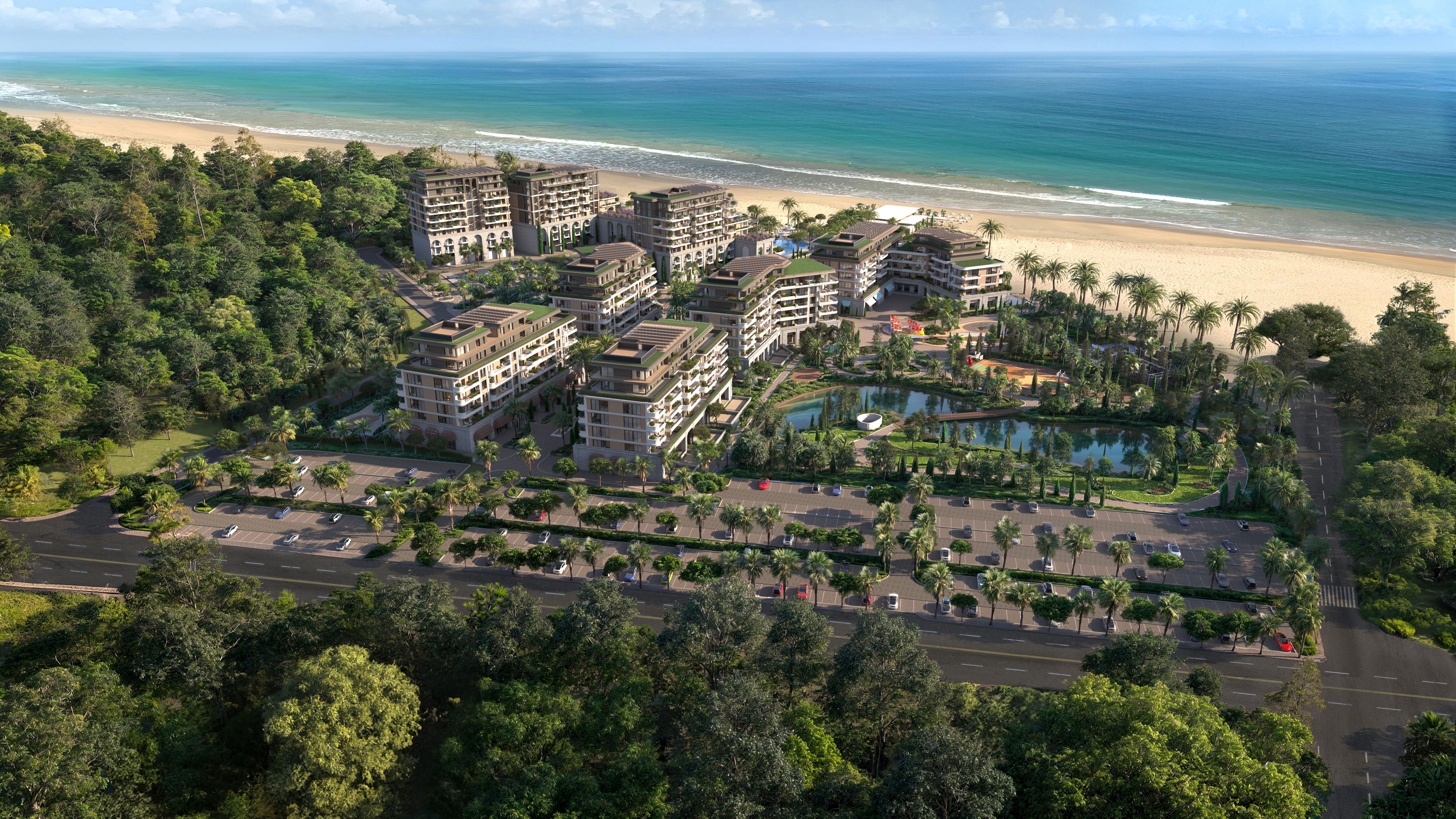
When a project includes multiple buildings, apartments, hotel facilities, restaurants, swimming pools, a spa, sports areas, landscaped spaces, and other infrastructure, its development is naturally organised across several stages.
This is the essence of phased construction.
Porta Rai is being developed across three phases, which together will form the complete resort concept on Velika Plaža.
For an early-stage investor, phased construction means being able to follow the project as it gradually moves from a masterplan to a real destination.
Individual buildings and amenities progress first, followed by subsequent parts of the development, while each new phase makes the complete vision increasingly visible.
This is why investors who buy before completion do not focus solely on the progress of their own apartment.
They also look at the direction in which the entire project is developing.
At Porta Rai, that development leads towards a 5★ beachfront resort that brings together apartments, hotel amenities, professional management, and the condo hotel model within a single destination.

An investor entering a project at an early stage does not make a decision based on price alone.
Important factors include location, the masterplan, project quality, the companies behind the development, development phases, amenities, and the way the property will operate after completion.
For resort properties, the question of who will manage the destination is particularly important.
At Porta Rai, professional hotel and operational management is entrusted to Karisma Hotels & Resorts, which already operates on Velika Plaža through Azul Beach Resort Montenegro, located immediately next to the Porta Rai development.
The beachfront location, condo hotel model, professional rental management, and concept of a destination designed to operate 365 days a year are also part of this broader picture.
An investor is therefore not simply analysing the property they are buying today.
They are trying to understand what the project will represent once it is fully developed.


There is another dimension to early-stage investing that can be just as important as the timing of entering the project itself.
It is the stage of development of the destination.
Montenegro’s best-known coastal real estate markets have undergone significant development over the past several years.
Budva, Kotor, and Tivat are now established destinations with developed tourism and premium real estate offerings, as well as high property price levels.
Ulcinj and Velika Plaža are at a different stage.
And that is precisely what makes them particularly interesting to investors who are not only looking at where the market stands today, but also where it could be after the next period of development.
Ulcinj is Montenegro’s southernmost coastal city, known for its high number of sunny days and long tourism season.
Velika Plaža, with its long sandy coastline, offers something that is becoming increasingly difficult to find in many already developed parts of the Montenegrin coast: space for large-scale, master-planned beachfront developments.
As new hotel and resort investments arrive, the profile of the destination also evolves.
The tourism offering expands, new standards of accommodation and service emerge, and Velika Plaža gains the potential to attract a different profile of visitors and property buyers.
The level of interest in this development makes the current stage particularly interesting.
Because with early-stage investing, an investor sometimes enters early not only into a single project.
They also enter early into the wider development story of a location.
Porta Rai is being developed within precisely this context.
As a 5★ Beachfront Hotel & Residences, the project is located directly on Velika Plaža, in the first line to the sea, and is being developed as a complete resort destination rather than simply a collection of apartments.
The condo hotel model, professional management by Karisma Hotels & Resorts, hotel and dining facilities, spa, swimming pools, sports and family amenities, as well as the concept of operating 365 days a year, are all part of the broader vision for Porta Rai to become a new beachfront destination on this part of the Adriatic.
For an investor, this means that two development cycles are taking place in parallel.
The first is the development of Porta Rai itself.
The project is progressing through construction and three sales phases. As sales and construction advance, the price per square metre is periodically adjusted, while a 20% difference is planned between the starting prices of consecutive phases.
The second development cycle is Velika Plaža itself.
As new projects arrive in the area and the tourism offering continues to develop, the market positioning of the destination evolves as well.
It is precisely the combination of these two processes that makes the timing of entry particularly interesting.
An investor buying at an early stage is not looking only at the current price of an apartment.
They are considering where Porta Rai stands today in relation to its completed concept and where Velika Plaža stands today in relation to its future development.
This is at the heart of the early-stage investment strategy.
The most significant changes in a real estate market do not necessarily begin only once everything is complete and visible. Investors often aim to identify projects and destinations during the period when their new market position is still taking shape.
This does not mean that the future market value of an individual property is predetermined. It is influenced by a wide range of market factors.
But with Porta Rai, there are several elements investors can evaluate very clearly today: a defined phased sales structure, planned price progression within the project, and the development of the destination in which they are buying.
For this reason, an early-stage purchase on Velika Plaža is not simply about asking:
“How much does a square metre cost today?”
A more interesting question is:
“At which stage do I want to enter – before or after the next step in the development of the project and destination?”
For a buyer who recognises the potential of Velika Plaža and wants to become part of Porta Rai while the selection of apartments is still wider and the project is at an earlier point in its pricing cycle, timing can be one of the most important elements of the decision.
Discover more about the current phase of Porta Rai, current pricing, and available apartments on Velika Plaža.
Early-stage property investment refers to buying a property during an earlier stage of a project’s development and sales cycle, before the project is fully completed. This allows an investor to enter while the development is still progressing and a larger part of the inventory may still be available.
Reasons can include an earlier pricing level, a wider selection of available apartments, and the opportunity to enter a project at an earlier point in its development and sales cycle.
Early-stage pricing refers to the price level available during an earlier stage of a project’s sales cycle. At Porta Rai, prices are periodically adjusted as sales and construction progress, with the most significant change planned between sales phases.
Porta Rai is sold across three phases. The starting price per square metre in each new phase is planned to be 20% higher than the starting price of the previous phase, with additional periodic price increases taking place within the individual sales phases.
At an earlier stage, buyers typically have a wider selection of available units, offering more choice in terms of floor, position, view, size, and layout. As sales progress, the structure of the available inventory naturally changes.
In addition to price, investors may consider the location, masterplan, project quality, development phases, companies involved, planned amenities, professional management, and the development potential of the destination.
Velika Plaža offers space for the development of large-scale beachfront and resort projects and is at a different stage of development compared with Montenegro’s more established coastal destinations. Investors can therefore consider both individual projects and the broader evolution of Ulcinj and Velika Plaža as a tourism and real estate destination.